

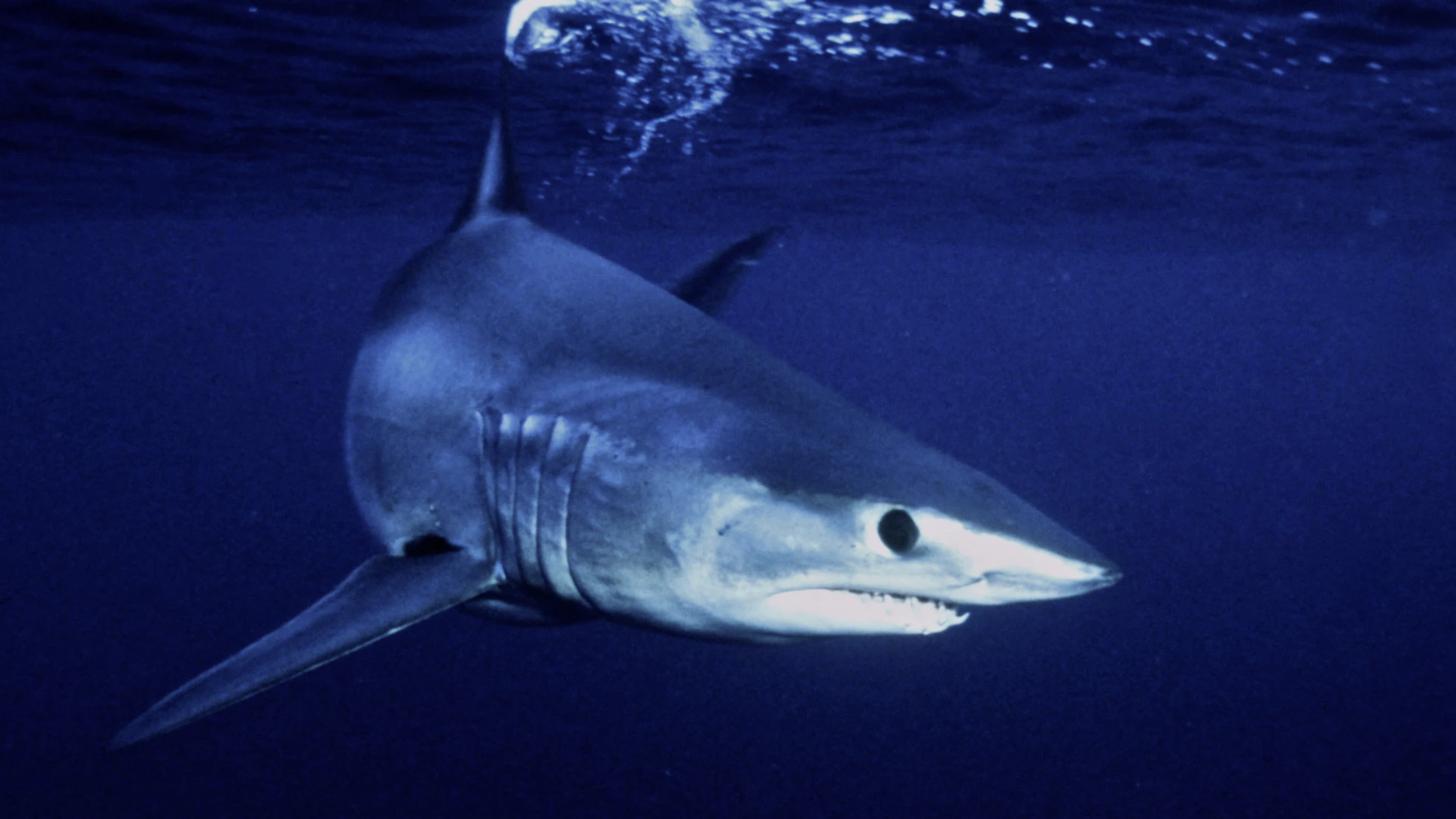
Sharks are helping scientists gather valuable oceanic data. Happy Shark Week.
Biologists are teaming up with an unexpected partner in crime: sharks. The two have been working together to predict when and where the next hurricane could hit, according to a new report from The Washington Post.
The extra help comes just in time, as the Trump administration’s recent hit to funding and staff at the National Oceanic and Atmospheric Administration threatens to leave biologists without the resources for hurricane forecasting. Luckily, these underwater researchers are already delivering new data.
Equipped with sensors attached to their dorsal fins, the sharks are tasked with collecting and relaying information critical to predicting hurricanes, including the temperature, salt content and depth of the ocean.
Understanding where the ocean runs warm is important because heat plays a big part in hurricane formation. The atmosphere absorbs heat from the ocean, and when that air rises it forms clouds of moisture. If the resulting storm continues above hot water, it’ll get stronger.
With the access they have to the underwater world, sharks are the dream agents for the job. Still, they aren’t working alone, but rather in tandem with existing research tactics to provide forecasters with even more data to work from.
“Sharks are faster than [robotic] gliders. They can stay out for longer periods of time,” says Caroline Wiernicki, a shark ecologist and PhD student working with Carlisle. “So the hope is that we can have these sharks go out and work in concert” with existing monitors.
How do the researchers enlist the sharks? With food, of course. They dumped frozen chum into the ocean in May, and two shortfin mako sharks took the bait. Biologists detained and tagged them, attempting to do so without causing excess pain.
Shortfin mako sharks, which are the fastest known species of shark, frequent the ocean’s surface, which makes it easier for onboard sensors to send the data to satellites.
So far, one of the sharks has been swimming in waters too shallow to trigger the sensor, but the researchers have begun to receive temperature data from the other.
“The more data we have, the better things will be,” Jill Trepanier, a Louisiana State University professor who focuses on hurricane climatology, told the Post. “So, if it’s a shark collecting it or a buoy or glider, I say, go for it.”
Sharks aren’t the only animal that scientists have used to gather data. Southern elephant seals and narwhals have long tracked temperature in the Antarctic and Arctic respectively. And almost a decade ago, it came to light that Russia and Ukraine have tried to turn dolphins and whales into military spies.